
How to IncreaseWebsite Traffic Organically
How to Increase Website Traffic Organically in 2026: 15 Proven Strategies
Every website owner wants more visitors, but paying for ads isn’t the only way to grow. Learning how to increase website traffic organically can help you attract consistent, high-quality visitors without relying solely on paid advertising. Organic traffic comes from search engines, social media, referrals, and other unpaid channels, making it one of the most sustainable ways to build an online presence.
In this guide, you’ll discover 15 proven strategies to increase website traffic organically, improve your search engine rankings, and grow your audience in 2026.
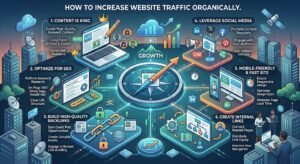
What Is Organic Website Traffic?
Organic website traffic refers to visitors who find your website through unpaid search engine results or other non-paid channels. Unlike paid advertising, organic traffic is earned by creating valuable content, optimizing your website for search engines, and providing a great user experience.
Benefits of Organic Traffic
- Long-term growth
- Higher credibility
- Better return on investment (ROI)
- Increased brand awareness
- More qualified leads
- Sustainable business growth
Why Organic Traffic Matters
Organic traffic is valuable because visitors are actively searching for information, products, or services. This often results in higher engagement and better conversion potential compared to many interruption-based marketing methods.
Businesses that consistently invest in SEO and high-quality content often build stronger online visibility over time.
15 Proven Ways to Increase Website Traffic Organically
1. Perform Keyword Research
Keyword research is the foundation of SEO.
Find keywords that:
- Match user intent
- Have reasonable search volume
- Are relevant to your niche
- Include long-tail search phrases
Targeting the right keywords helps search engines understand your content and connect it with relevant searches.
2. Publish High-Quality Content
Create content that solves real problems for your audience.
Examples include:
- How-to guides
- Tutorials
- Case studies
- Industry news
- Checklists
- Expert interviews
- Frequently asked questions
Helpful, original content is more likely to earn engagement and backlinks.
3. Optimize On-Page SEO
Improve every page by optimizing:
- Title tags
- Meta descriptions
- Headings (H1–H3)
- Image alt text
- URL structure
- Internal links
- Keyword placement
Write naturally for readers rather than overusing keywords.
4. Focus on Search Intent
Understand what users expect when they search.
Ask yourself:
- Are they looking for information?
- Do they want to compare products?
- Are they ready to buy?
- Do they need a tutorial?
Content that satisfies search intent is more likely to perform well.
5. Improve Website Speed
A fast website supports a better user experience.
Ways to improve speed:
- Compress images
- Enable browser caching
- Minify CSS and JavaScript
- Use a Content Delivery Network (CDN)
- Choose reliable web hosting
6. Make Your Website Mobile-Friendly
Most users browse on smartphones.
Ensure your website:
- Uses responsive design
- Loads quickly on mobile devices
- Has readable text
- Features easy navigation
- Includes accessible buttons and menus
7. Build Internal Links
Internal links help visitors and search engines discover more of your content.
Benefits include:
- Better navigation
- Improved page authority distribution
- Longer session duration
- Easier content discovery
Link to relevant pages where it genuinely adds value.
8. Earn High-Quality Backlinks
Backlinks from reputable websites can strengthen your site’s authority.
Ways to earn them:
- Publish original research
- Create shareable resources
- Guest blogging
- Digital PR
- Collaborate with industry experts
Focus on quality over quantity.
9. Update Existing Content
Refreshing older articles can improve their relevance.
Update:
- Statistics
- Examples
- Images
- Broken links
- SEO elements
- New industry developments
Regular updates signal that your content remains useful.
10. Optimize for Featured Snippets
Structure your content to answer common questions clearly.
Use:
- Numbered lists
- Bullet points
- Tables
- Short definitions
- Step-by-step instructions
These formats may increase the chances of appearing in enhanced search results.
11. Create Evergreen Content
Evergreen content remains useful over time.
Examples include:
- Beginner guides
- Tutorials
- Best practices
- Industry fundamentals
- Resource lists
Such content can continue attracting visitors long after publication.
12. Use Social Media to Amplify Content
While social shares are not a direct ranking factor, they can increase visibility and bring more visitors to your website.
Share your content on platforms where your audience is active and encourage meaningful engagement.
13. Optimize Images for SEO
Image optimization helps improve both user experience and discoverability.
Best practices include:
- Descriptive file names
- Alt text
- Appropriate image sizes
- Modern formats where supported
- Image compression
14. Monitor Website Performance
Track important metrics such as:
- Organic traffic
- Bounce rate
- Time on page
- Click-through rate (CTR)
- Keyword rankings
- Conversion rate
Regular analysis helps identify opportunities for improvement.
15. Be Consistent
SEO is a long-term strategy.
Publish new content regularly, maintain technical health, improve existing pages, and continue learning as search engines evolve.
Consistency often leads to stronger long-term growth than short-term tactics.
Common Mistakes to Avoid
Avoid these common SEO mistakes:
- Keyword stuffing
- Duplicate content
- Ignoring mobile optimization
- Slow-loading pages
- Poor internal linking
- Publishing thin or low-value content
- Neglecting technical SEO
- Failing to update outdated articles
Organic Traffic Trends for 2026
Website owners should pay attention to:
- AI-assisted search experiences
- Helpful, people-first content
- Strong topical authority
- Improved user experience
- Voice search optimization
- Core Web Vitals
- High-quality multimedia content
- Local SEO for location-based businesses
Adapting to these trends can help maintain and improve organic visibility.
Conclusion
Learning how to increase website traffic organically takes time, but the rewards are long-lasting. By focusing on keyword research, helpful content, on-page SEO, website performance, internal linking, and earning quality backlinks, you can steadily build a stronger online presence.
Rather than chasing quick wins, prioritize creating value for your audience. Consistent improvements and a user-first approach are the foundation of sustainable organic traffic growth.
Frequently Asked Questions (FAQs)
1. What is organic website traffic?
Organic website traffic consists of visitors who reach your website through unpaid search engine results or other non-paid sources.
2. How long does it take to increase organic traffic?
Results vary depending on your website, competition, and strategy. Meaningful SEO improvements often take several months rather than days or weeks.
3. Is SEO the best way to get organic traffic?
SEO is one of the most effective long-term methods, especially when combined with valuable content, a positive user experience, and consistent optimization.
4. How often should I publish new content?
Quality matters more than quantity. A consistent publishing schedule that you can maintain is generally more effective than posting frequently without maintaining quality.
5. Do backlinks still matter?
Yes. High-quality backlinks remain an important signal of authority, though relevance and quality are more valuable than sheer volume.
6. Can social media increase organic traffic?
Yes. Social media can expose your content to a wider audience, leading to more website visits and potential backlinks.
7. Does website speed affect SEO?
Yes. Faster websites generally provide a better user experience, which can support stronger search performance.
8. What is the biggest SEO mistake?
Publishing low-quality or unhelpful content and neglecting user experience are among the most common mistakes.
9. How important is keyword research?
Keyword research helps you understand what your audience is searching for and allows you to create content that addresses those needs.
10. Can beginners increase website traffic organically?
Yes. By learning SEO fundamentals, creating valuable content, and consistently improving their website, beginners can steadily grow organic traffic over time.