
How to Increase Website Traffic Organically
Organic website traffic refers to visitors who find your website through unpaid search engine results on platforms like Google. These users arrive because your content matches their search intent—not because they clicked on a paid advertisement.
Organic traffic is valuable because it often brings highly relevant visitors who are genuinely interested in your content or services.
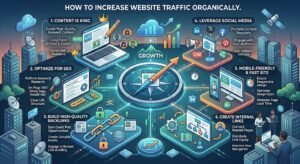
How to Increase Website Traffic Organically in 2026: 15 Proven Strategies
Every website owner wants more visitors, but paying for ads isn’t always the most sustainable solution. If you’re looking for long-term growth, learning how to increase website traffic organically is one of the smartest investments you can make.
Organic traffic comes from unpaid search engine results, making it a cost-effective way to attract people who are actively searching for the information, products, or services you offer. By combining strong SEO, valuable content, and a great user experience, you can steadily grow your audience and improve your online visibility.
In this guide, you’ll discover 15 proven strategies to increase organic website traffic in 2026.
Why Organic Traffic Matters
Growing your website organically offers several long-term benefits:
- Builds trust and credibility
- Generates consistent visitors over time
- Reduces advertising costs
- Improves brand awareness
- Increases leads and sales
- Delivers better long-term return on investment (ROI)
Unlike paid campaigns, well-optimized content can continue attracting visitors for months or even years.
15 Proven Ways to Increase Website Traffic Organically
1. Perform Keyword Research
Keyword research helps you understand what your audience is searching for.
Focus on:
- Long-tail keywords
- Low-competition keywords
- Question-based searches
- Local keywords (if applicable)
Targeting keywords with clear search intent increases your chances of ranking higher.
2. Create High-Quality Content
Content remains one of the strongest drivers of organic traffic.
Publish:
- Blog posts
- How-to guides
- Tutorials
- Case studies
- Industry news
- Checklists
- Comparison articles
- Frequently asked questions
Your content should answer users’ questions clearly and provide practical value.
3. Optimize On-Page SEO
Every page should include:
- Keyword-rich title tag
- Compelling meta description
- Clear headings (H1, H2, H3)
- Internal links
- Optimized images
- Descriptive URLs
- Relevant keywords used naturally
On-page SEO helps search engines understand your content.
4. Improve Website Speed
A slow website can discourage visitors and affect search rankings.
Improve performance by:
- Compressing images
- Enabling browser caching
- Using a content delivery network (CDN)
- Minimizing unnecessary code
- Choosing reliable hosting
Fast websites provide a better user experience.
5. Make Your Website Mobile-Friendly
Most users browse the web on mobile devices. Ensure your website:
- Loads quickly on smartphones
- Has responsive design
- Uses readable fonts
- Features easy navigation
- Includes accessible buttons
A mobile-friendly website supports both user satisfaction and SEO.
6. Publish Content Consistently
Consistency builds authority.
Create a content calendar and publish valuable articles regularly. Frequent updates encourage search engines to crawl your website more often and give readers reasons to return.
7. Optimize for Search Intent
Before writing, identify what users expect when they search a keyword.
Ask yourself:
- Are they looking for information?
- Do they want to compare products?
- Are they ready to buy?
- Are they searching for local services?
Matching search intent improves engagement and rankings.
8. Build Internal Links
Internal links help visitors discover related content and assist search engines in understanding your site’s structure.
Link naturally to relevant pages and cornerstone articles to improve navigation and distribute authority across your website.
9. Earn High-Quality Backlinks
Backlinks from reputable websites can strengthen your site’s authority.
Ways to earn them include:
- Guest blogging
- Publishing original research
- Creating shareable resources
- Building relationships with industry websites
- Producing valuable content others want to reference
Focus on quality rather than quantity.
10. Refresh Existing Content
Update older articles by:
- Adding recent statistics
- Improving readability
- Expanding sections
- Fixing outdated information
- Including new keywords
- Updating images
Refreshing content can improve rankings without creating entirely new articles.
11. Optimize Images for SEO
Images can contribute to organic traffic when optimized properly.
Best practices include:
- Descriptive file names
- Keyword-rich alt text
- Compressed file sizes
- Modern image formats
- Relevant visuals that support the content
12. Use Structured Data (Schema Markup)
Schema markup helps search engines better understand your content and may improve your visibility with rich results, such as FAQs, reviews, and articles.
13. Promote Content on Social Media
While social media shares are not direct ranking factors, they can increase content visibility, drive referral traffic, and attract backlinks.
Share your articles across relevant platforms and encourage engagement.
14. Improve User Experience (UX)
A positive user experience encourages visitors to stay longer and explore more pages.
Focus on:
- Clear navigation
- Easy-to-read formatting
- Fast loading times
- Helpful calls to action
- Logical site structure
Satisfied users are more likely to return and recommend your content.
15. Monitor SEO Performance
Track your progress regularly using analytics and search performance tools.
Monitor:
- Organic traffic
- Keyword rankings
- Click-through rates (CTR)
- Bounce rate
- Conversion rates
- Top-performing pages
Use the data to refine your strategy over time.
Common Mistakes to Avoid
Avoid these practices that can limit organic growth:
- Keyword stuffing
- Publishing thin or duplicate content
- Ignoring technical SEO
- Neglecting mobile optimization
- Buying low-quality backlinks
- Using misleading titles
- Failing to update outdated content
- Ignoring user search intent
Frequently Asked Questions (FAQs)
1. What is organic website traffic?
Organic website traffic consists of visitors who reach your website through unpaid search engine results rather than paid advertisements.
2. How long does it take to increase website traffic organically?
SEO is a long-term strategy. Depending on your website’s authority, competition, and content quality, noticeable improvements often take several months, with continued growth over time through consistent optimization.
3. What is the best way to increase organic traffic?
The most effective approach combines keyword research, high-quality content, on-page SEO, technical SEO, internal linking, backlink building, and regular content updates.
4. Does blogging help increase website traffic?
Yes. Publishing helpful, optimized blog posts that answer users’ questions can improve search visibility, attract backlinks, and generate consistent organic traffic.
5. Are backlinks still important for SEO?
Yes. High-quality backlinks remain an important signal of authority. Focus on earning links naturally from reputable and relevant websites instead of using manipulative link-building tactics.
6. How often should I publish new content?
Quality is more important than quantity. A consistent publishing schedule—whether weekly, biweekly, or monthly—helps build authority while giving search engines fresh content to index.
7. Can I increase website traffic without paid advertising?
Absolutely. By investing in SEO, content marketing, user experience, and technical optimization, you can attract qualified visitors organically without relying on paid ads.
8. Which SEO factors have the biggest impact on organic traffic?
Some of the most influential factors include relevant content, search intent, page speed, mobile usability, internal linking, technical SEO, high-quality backlinks, and a positive user experience.
Conclusion
Understanding how to increase website traffic organically is essential for building sustainable online growth. Rather than chasing quick wins, focus on creating valuable content, optimizing your website for users and search engines, and continuously improving your SEO strategy.
Organic traffic takes time to build, but the results are often more durable and cost-effective than paid advertising. By applying the strategies outlined in this guide, you can strengthen your search visibility, attract the right audience, and support long-term business success.